EN

+86 139 2073 4749



 EN
Manufacturers often compare multi-axis welding robots with traditional welding methods when they need to increase production capacity, improve weld consistency, or reduce dependence on skilled welders. However, automation is not simply about replacing a welder with a robot. The better choice depends on production volume, weld geometry, workpiece size, required accuracy, and the amount of repetition in the welding process.
For manufacturers handling repetitive metal fabrication, furniture frames, automotive components, or structural parts, multi-axis robotic welding can provide a more controlled and repeatable production process.
Traditional welding generally relies on operators to control torch movement, welding angle, travel speed, and positioning. The results can therefore vary with operator skill, fatigue, and working conditions.
A multi-axis welding robot uses programmable motion control to coordinate the welding torch across multiple axes. Juyoubao's systems include 6-axis and 8-axis configurations, as well as gantry-type multi-axis welding machines for larger or longer workpieces.
|
Comparison Factor |
Traditional Manual Welding |
Multi-Axis Welding Robot |
|
Welding consistency |
Depends on operator skill |
Highly repeatable |
|
Torch angle |
Manually controlled |
Precisely controlled by multiple axes |
|
Production speed |
Limited by operator endurance |
Suitable for continuous automated production |
|
Labor requirement |
Requires skilled welders |
Operators mainly handle setup, loading and monitoring |
|
Complex weld paths |
Depends heavily on operator experience |
Programmable multi-axis movement |
|
Repetitive production |
More fatigue and variation over time |
Stable cycle-to-cycle performance |
|
Weld appearance |
May vary between operators |
More uniform weld seams |
|
Spatter control |
Depends on welding technique |
Stable torch positioning can reduce spatter |
|
Changeover |
Requires manual adjustment |
Programs can be configured for different parts |
|
Large workpieces |
Flexible but labor intensive |
Gantry systems can provide extended working ranges |
In manual welding, even experienced welders may produce variations in torch angle, travel speed, and weld positioning during long production runs.
Multi-axis systems can maintain a programmed welding path and torch orientation throughout the operation. This is particularly useful when the same component must be welded repeatedly.
Juyoubao's 6-axis welding robots are designed for standard automated welding tasks, while 8-axis configurations provide additional flexibility for complex geometries and multi-angle welding.
Manual welding output is affected by operator availability, fatigue, breaks, and shift changes. These factors become more significant when manufacturers receive large and repetitive orders.
A robotic welding workstation can perform programmed welding cycles with limited operator intervention. When combined with suitable fixtures and material handling, automation can help manufacturers establish a more predictable production rhythm.
The objective is not simply higher robot speed. It is stable throughput with fewer variations between production cycles.
Some components require welding from multiple directions. Manually repositioning the torch or workpiece can increase operation time and make it more difficult to maintain the desired welding angle.
Multi-axis linkage allows the welding torch to approach the joint from different directions while maintaining controlled movement.
This is especially valuable for:
Metal frames
Furniture structures
Motorcycle and bicycle components
Automotive parts
Solar component accessories
Custom metal assemblies
Juyoubao's multi-axis welding systems are designed for these types of fabrication applications.
A conventional robotic arm has a defined working envelope. For oversized structures, simply selecting a larger robot may not be the most practical solution.
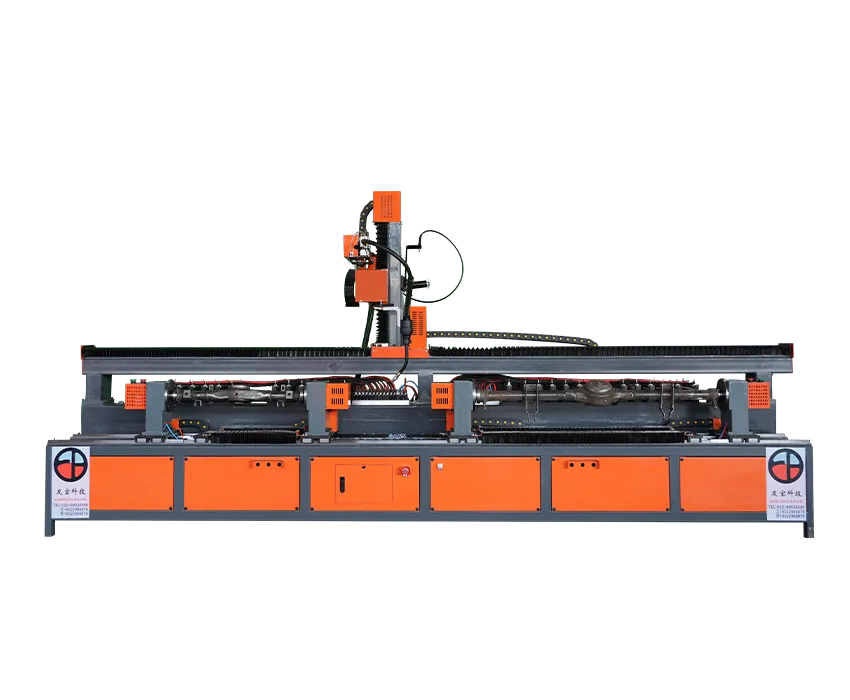
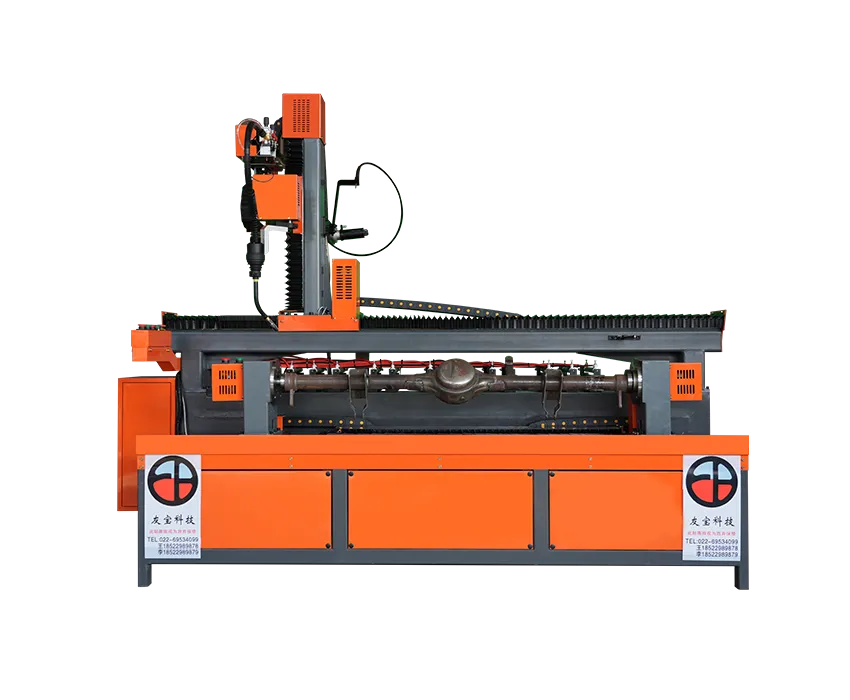
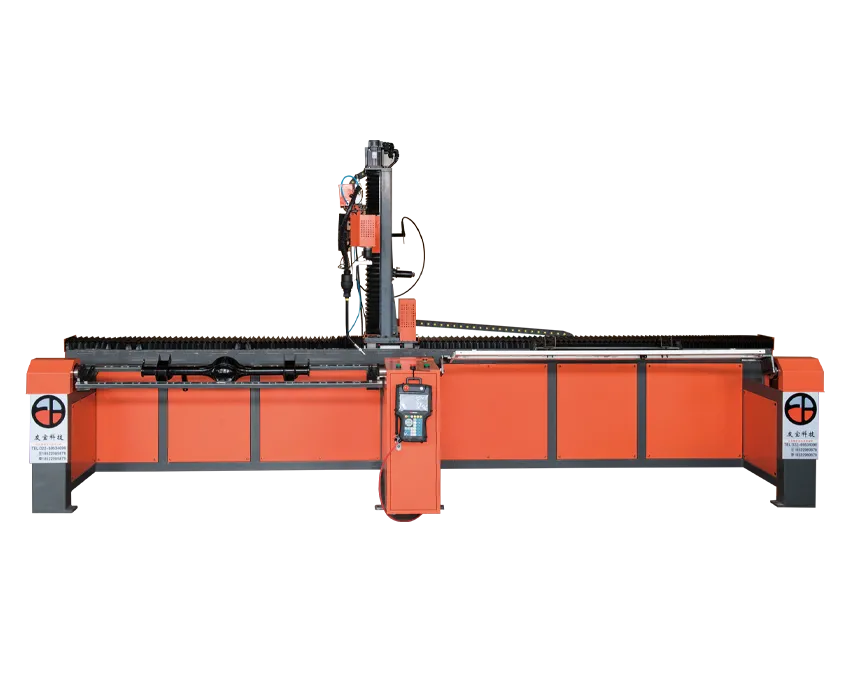
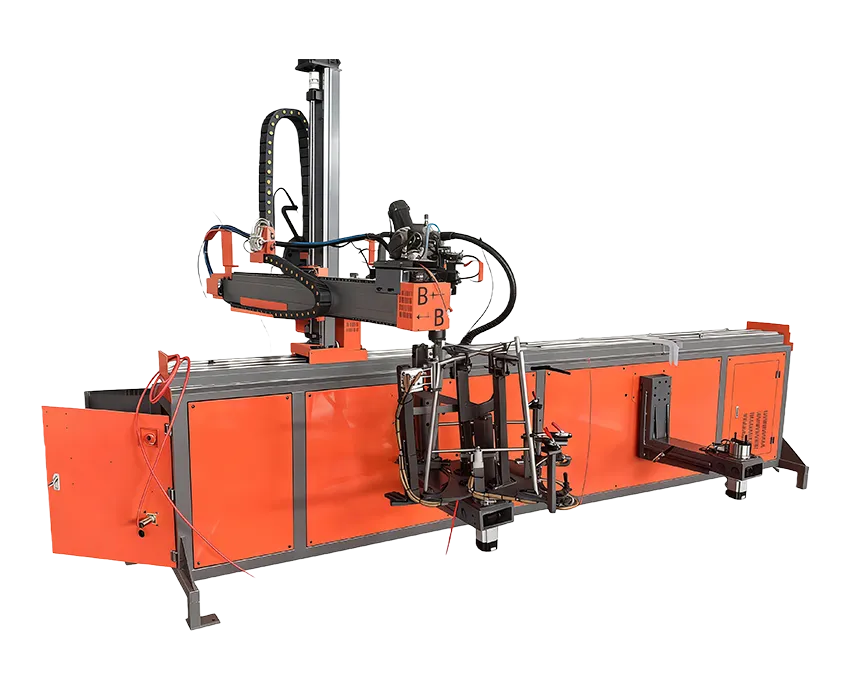
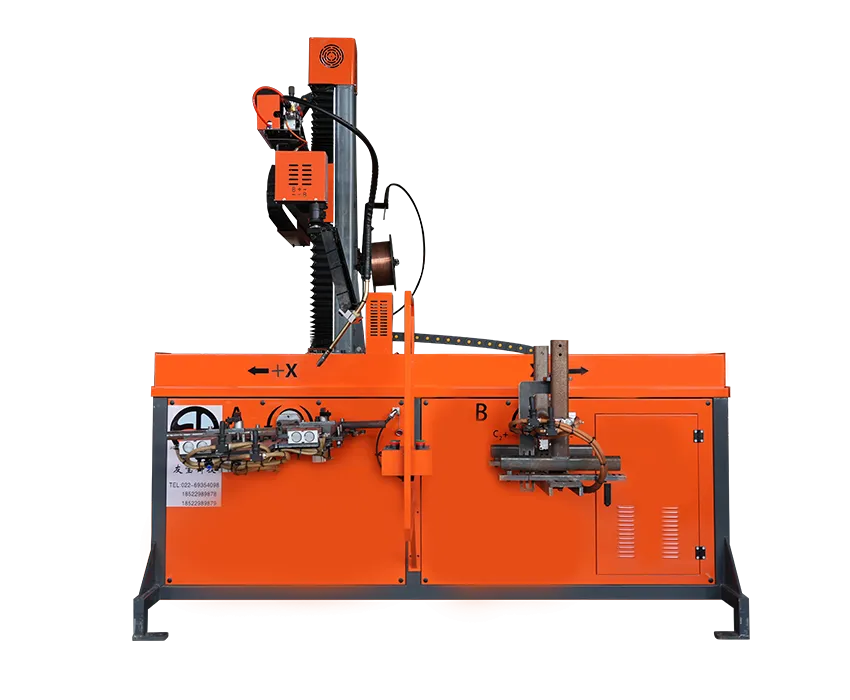
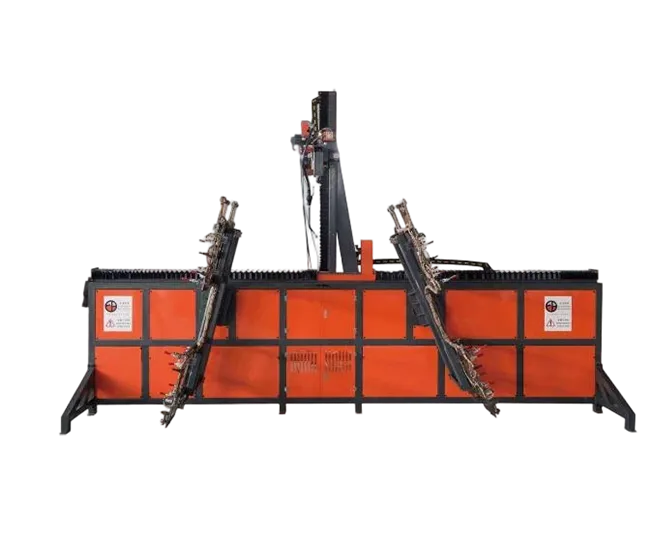
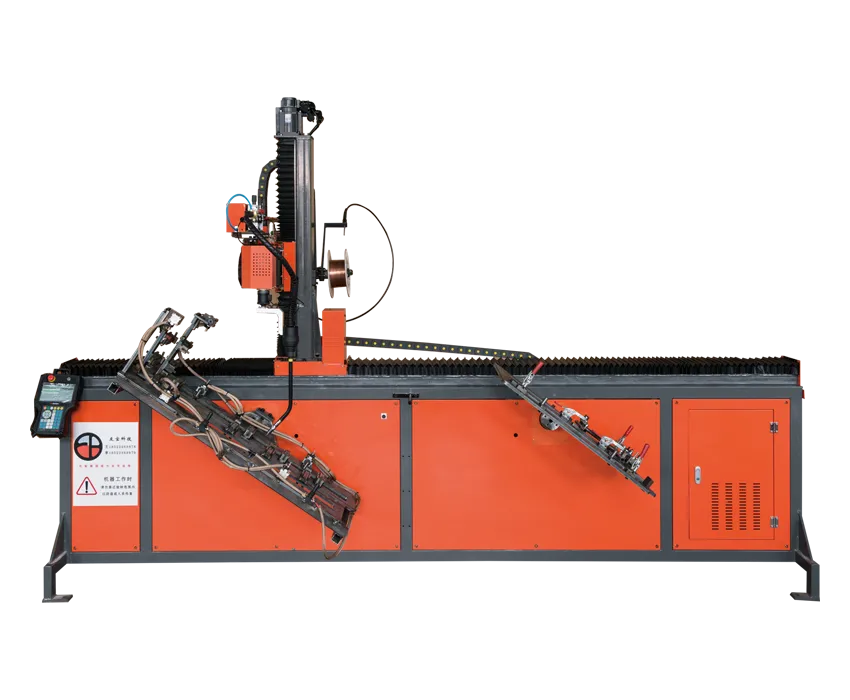
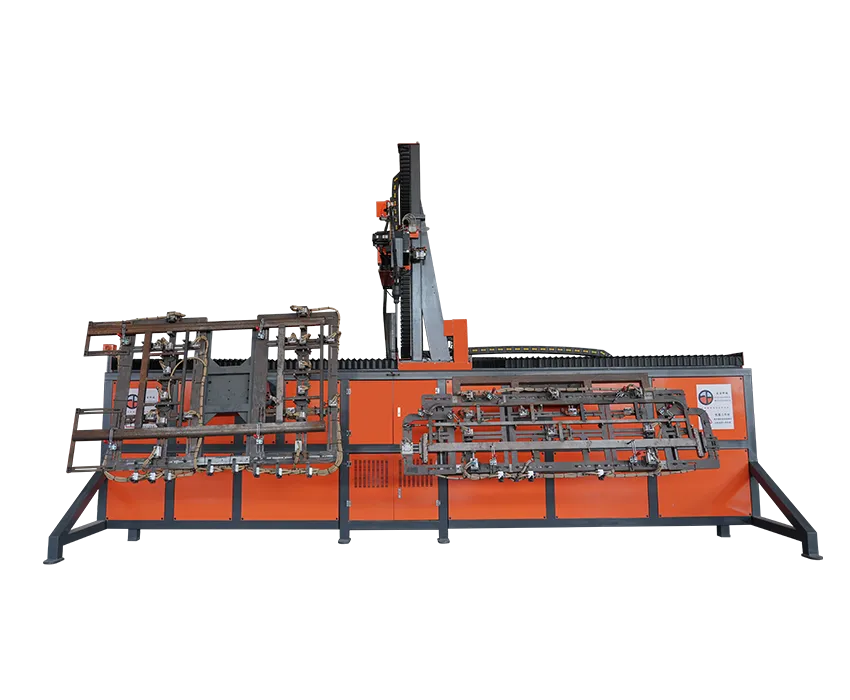
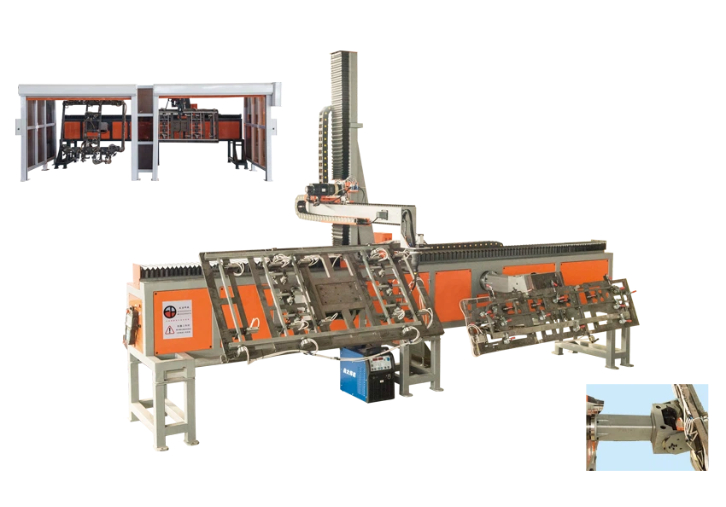
A gantry-type multi-axis welding machine provides an alternative by adding linear travel axes to extend the working range. It is suitable for long, large, or multi-section components such as trailer frames, carts, material-handling equipment, industrial frames, and platforms.
For this reason, manufacturers should evaluate the workpiece dimensions and required welding range before choosing the robot configuration.
Not necessarily.
The role of personnel changes rather than disappearing completely. Instead of performing every repetitive weld manually, operators can focus on:
Workpiece loading and unloading
Fixture setup
Program selection
Welding parameter verification
Quality inspection
Production monitoring
Process maintenance
This allows skilled welding personnel to spend more time on complex joints, process optimization, inspection, and non-standard work.
Multi-axis robotic welding is worth evaluating when your production has several of the following characteristics:
Repetitive welding operations
Medium- to high-volume production
Consistent workpiece geometry
Multiple welding angles
High requirements for weld appearance
Increasing labor costs
Difficulty recruiting skilled welders
Requirements for stable production output
Need to reduce rework or secondary grinding
For very low-volume or highly customized products, manual welding may still be more practical. Automation should therefore be evaluated based on the actual workpiece, welding process, production volume, and fixture design rather than robot specifications alone.
The number of axes is only one part of the selection process.
6-axis welding robot: Suitable for many standard welding applications where flexible torch positioning is required.
8-axis welding robot: Provides additional motion flexibility for complex welding paths and multi-angle joints.
Gantry-type multi-axis welding machine: Better suited to oversized, long, or multi-section workpieces that require an extended working range.
Manufacturers should also consider welding process, workpiece dimensions, material, joint configuration, fixture accuracy, production volume, and required cycle time.
The robot itself is only one component of an automated welding solution. Fixture positioning, welding power source, wire feeding, motion control, programming, and material handling all influence the final result.
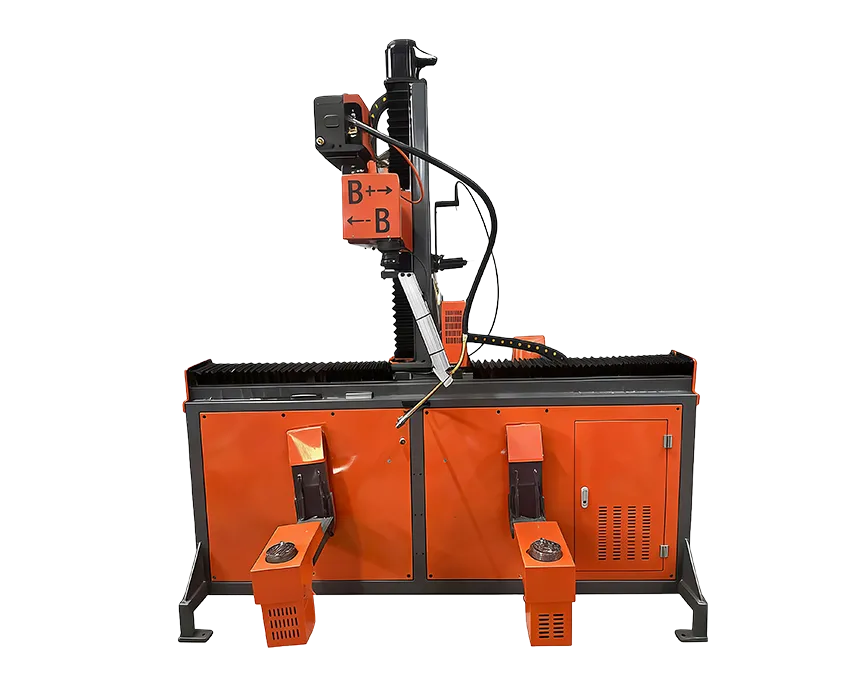
For example, Juyoubao's robotic welding workstation uses multi-axis linkage to maintain the welding torch at an appropriate angle, helping achieve more uniform welds and reduce spatter. Its systems can also be integrated into automated production processes according to application requirements.
For manufacturers considering automation, the most useful comparison is therefore not simply “robot vs. welder.” It is whether an integrated robotic welding system can provide better consistency, throughput, and production control for a specific product.
Traditional welding remains valuable for low-volume, highly customized, and difficult-to-automate work. However, when production involves repetitive welds, consistent workpieces, multiple welding positions, and growing output requirements, multi-axis welding robots can offer significant advantages in consistency, productivity, and process control.
The right configuration depends on the actual application. A 6-axis or 8-axis welding robot may suit compact and complex components, while a gantry-type system can provide the extended working range required for large structures.
Juyoubao provides customized robotic welding solutions based on workpiece geometry, welding requirements, production volume, and automation objectives.
Looking for a suitable multi-axis welding solution? Contact Juyoubao with your workpiece drawings, dimensions, material, and production requirements for a customized recommendation.
Related Products