EN
EN

+86 139 2073 4749



 EN
EN
As welding automation continues to transform modern manufacturing, more companies are investing in Multi-Axis Welding Robots to improve productivity, weld consistency, and operational efficiency. From automotive production lines to heavy equipment manufacturing, robotic welding systems have become essential tools for achieving higher output and lower labor costs.
However, even the most advanced robotic welding systems can experience performance challenges if they are not properly configured, maintained, or integrated into production processes.
Understanding common robotic welding problems and their solutions can help manufacturers maximize equipment performance, reduce downtime, and improve return on investment.
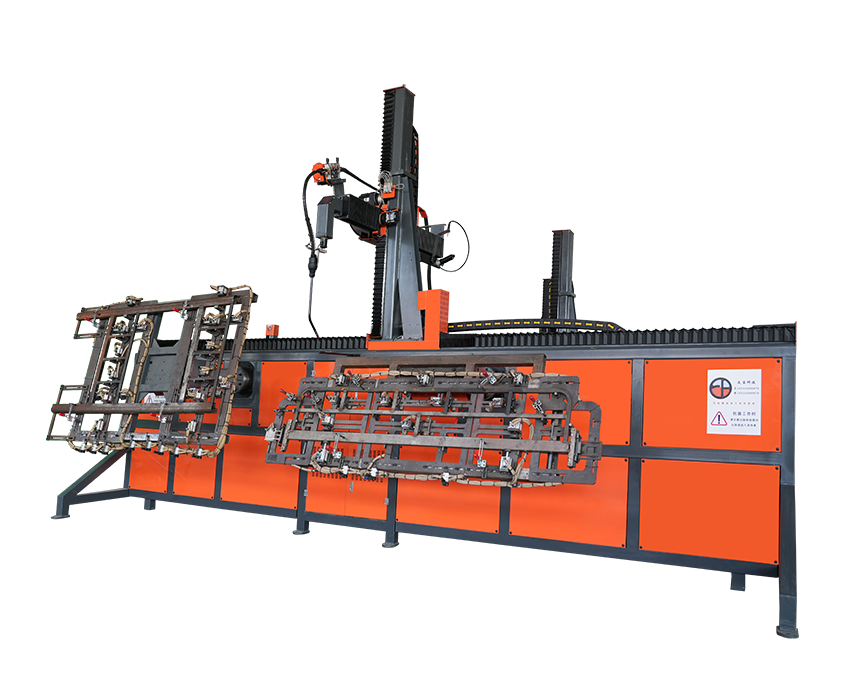
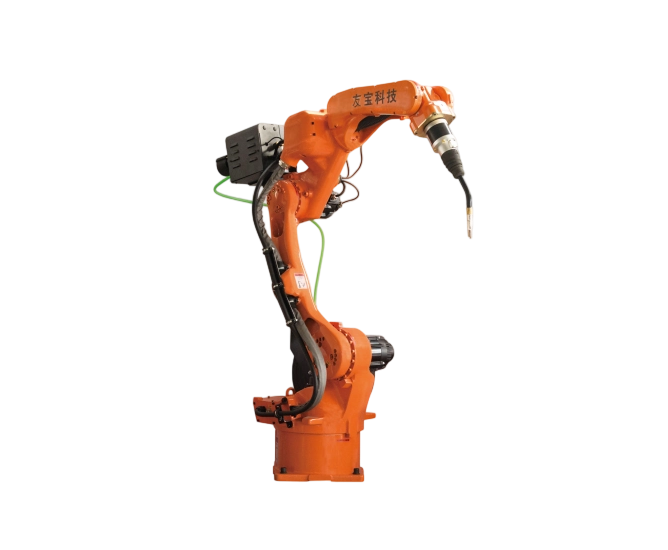
YB-08-JD High Speed Automatic Soldering Robot
Many robotic welding issues are not caused by the robot itself. Instead, they often result from a combination of factors involving equipment setup, material quality, welding parameters, fixture design, and operator training.
A complete robotic welding operation typically includes:
· Multi-Axis Welding Robots
· Robotic Welding Cell
· Welding Positioner
· Servo Positioning System
· Welding Power Source
· Vision-Guided Welding System
· Material Handling Equipment
If any component within this system performs poorly, overall welding quality may suffer.
Problem 1: Inconsistent Weld Quality
One of the most common concerns in welding automation is inconsistent weld quality.
Symptoms may include:
· Uneven weld beads
· Variable penetration
· Weld spatter
· Incomplete fusion
Solution
Manufacturers should first verify welding parameters such as voltage, current, travel speed, and wire feed rate.
Advanced Multi-Axis Welding Robots equipped with Vision-Guided Welding technology can automatically adjust welding paths and compensate for minor part variations.
Regular calibration of robotic arms and welding fixtures also helps maintain consistent weld quality.
Consistent welding quality reduces rework costs and improves customer satisfaction.
Problem 2: Poor Joint Fit-Up
Even the most sophisticated robotic welding system cannot compensate for severely misaligned components.
Poor joint preparation often leads to:
· Gaps between parts
· Misalignment
· Weak weld strength
Solution
Implement tighter manufacturing tolerances and use precision fixtures.
Modern Servo Positioning Systems can improve component positioning accuracy and ensure repeatable part placement before welding begins.
Investing in proper fixture design often delivers faster ROI than increasing welding speed.
Problem 3: Excessive Weld Spatter
Weld spatter not only affects appearance but also increases cleaning and maintenance costs.
Common causes include:
· Incorrect parameter settings
· Contaminated materials
· Improper shielding gas flow
Solution
Optimize welding parameters and ensure base materials are clean before welding.
Many manufacturers use advanced arc control technology integrated into Robotic Welding Systems to minimize spatter generation.
This improves productivity while reducing post-weld finishing requirements.
Problem 4: Robot Programming Errors
Programming mistakes can lead to poor weld quality, collisions, and production interruptions.
Typical issues include:
· Incorrect torch angles
· Poor path planning
· Inaccurate weld start positions
Solution
Use Offline Programming Software to simulate welding operations before deployment.
Simulation tools allow engineers to identify potential issues and optimize robot movement without disrupting production.
For complex components, Multi-Axis Welding Robots provide additional flexibility and improved path control.
Problem 5: Production Downtime
Unexpected downtime can significantly impact manufacturing costs.
Causes often include:
· Equipment wear
· Sensor failures
· Cable damage
· Preventive maintenance neglect
Solution
Implement predictive maintenance programs supported by Industrial IoT technologies.
Monitoring robot performance in real time enables manufacturers to detect issues before failures occur.
Reducing downtime directly improves overall equipment effectiveness and production profitability.
Problem 6: Difficulty Welding Complex Components
Modern fabrication projects frequently involve irregular geometries and difficult welding positions.
Applications such as:
· Automotive chassis
· Structural steel fabrication
· Agricultural machinery
· Construction equipment
· Pressure vessel manufacturing
often require precise multi-directional movement.
Solution
Deploy Multi-Axis Welding Robots capable of reaching complex weld joints while maintaining optimal torch orientation.
Additional robot axes improve accessibility and reduce the need for manual repositioning.
This increases efficiency while maintaining weld quality.
Problem 7: Lack of Skilled Operators
Many manufacturers face labor shortages and difficulty recruiting experienced welders.
Without proper training, robotic systems may fail to achieve their full potential.
Solution
Invest in operator training programs focused on:
· Robot programming
· Welding parameter optimization
· Preventive maintenance
· Quality inspection
Combining skilled personnel with advanced automation creates the most effective welding operation.
Compared with conventional welding automation solutions, Multi-Axis Welding Robots offer several important advantages.
Greater Flexibility
Additional axes allow robots to access complex weld locations and handle intricate components.
Higher Accuracy
Advanced motion control systems maintain precise positioning throughout the welding process.
Improved Consistency
Robots repeat programmed movements with exceptional precision, reducing human variation.
Enhanced Productivity
Continuous operation increases throughput and supports large-scale manufacturing.
Better Integration
Modern systems integrate easily with:
· Vision-Guided Welding
· Welding Positioners
· Automated Production Lines
· Smart Factory Platforms
These capabilities help manufacturers minimize welding defects while maximizing operational efficiency.
Robotic welding continues to play a critical role in modern manufacturing, but achieving optimal results requires more than simply installing automation equipment.
By understanding common welding challenges and implementing effective solutions, manufacturers can improve weld quality, reduce downtime, and increase profitability.
For companies seeking long-term performance improvements, Juyoubao Multi-Axis Welding Robots provide a powerful solution through enhanced flexibility, precision, consistency, and automation capabilities.
As smart manufacturing continues to evolve, investing in advanced robotic welding technology remains one of the most effective ways to improve production efficiency and maintain a competitive advantage.
Related Products