EN
EN

+86 139 2073 4749



 EN
EN
The furniture industry is experiencing increasing demand for high-quality metal furniture, shorter production cycles, and consistent product quality. Traditional manual welding methods often face challenges such as unstable weld quality, high labor costs, and limited production efficiency.
With the development of industrial automation, furniture welding robot systems have become an effective solution for manufacturers producing metal beds, chairs, tables, and steel furniture structures.
Metal furniture welding automation helps manufacturers achieve:
Juyoubao provides professional robotic welding solutions designed for furniture manufacturers seeking stable and efficient automated production.
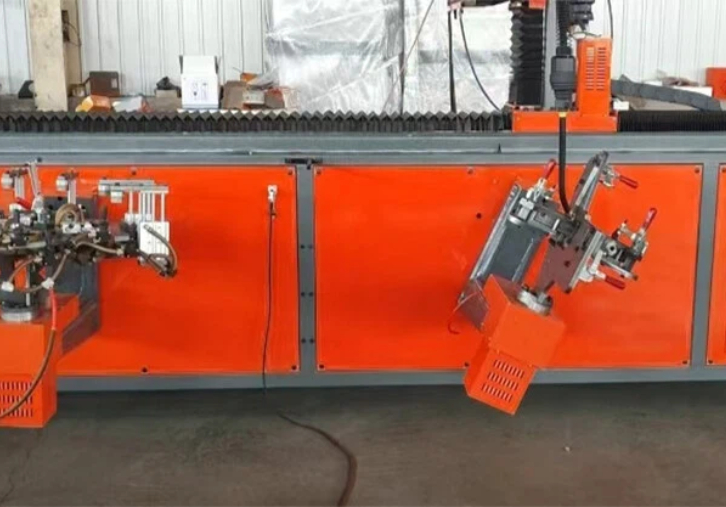
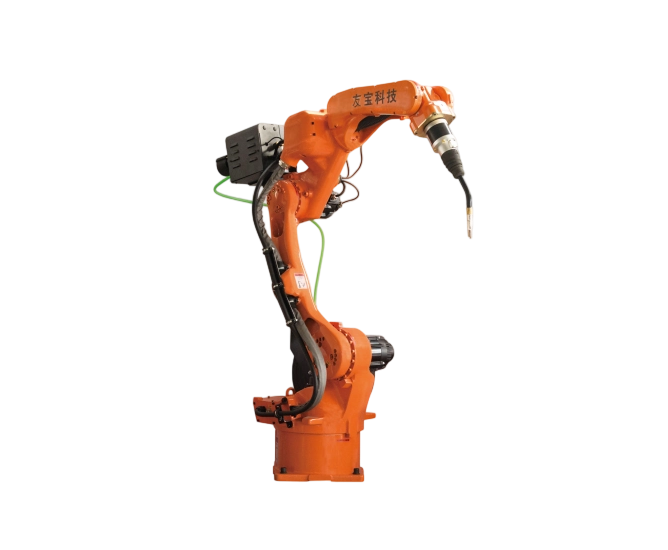
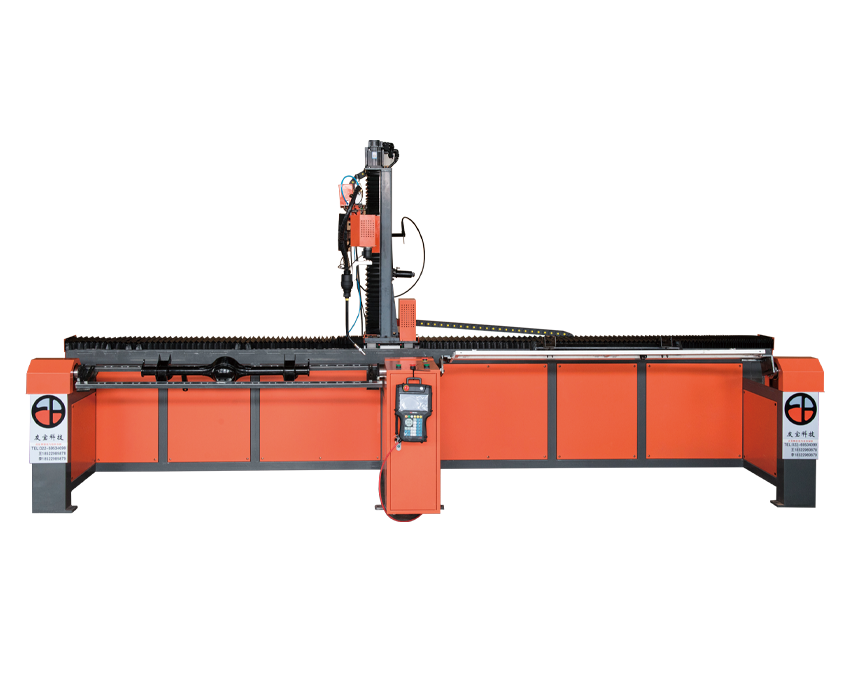
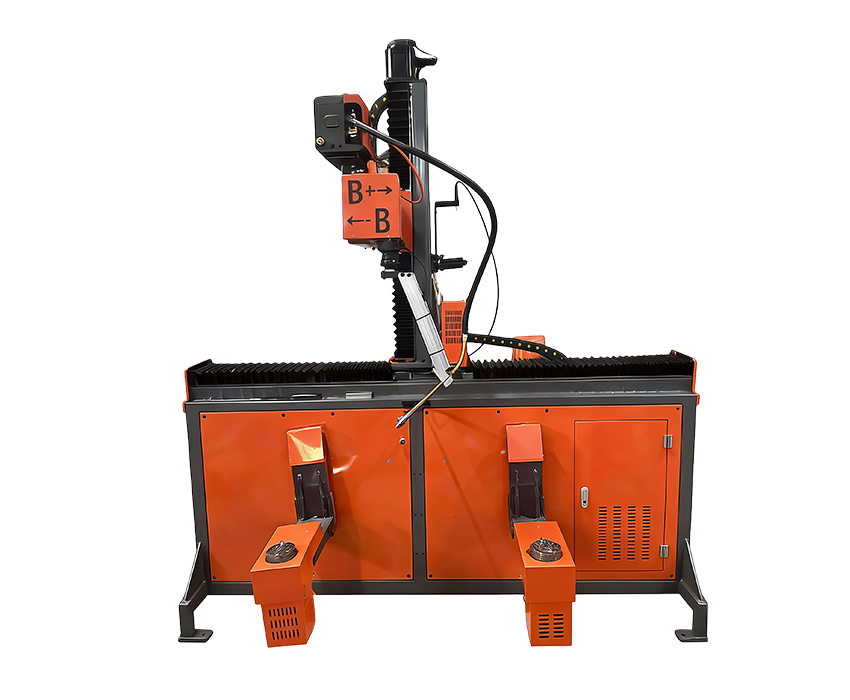
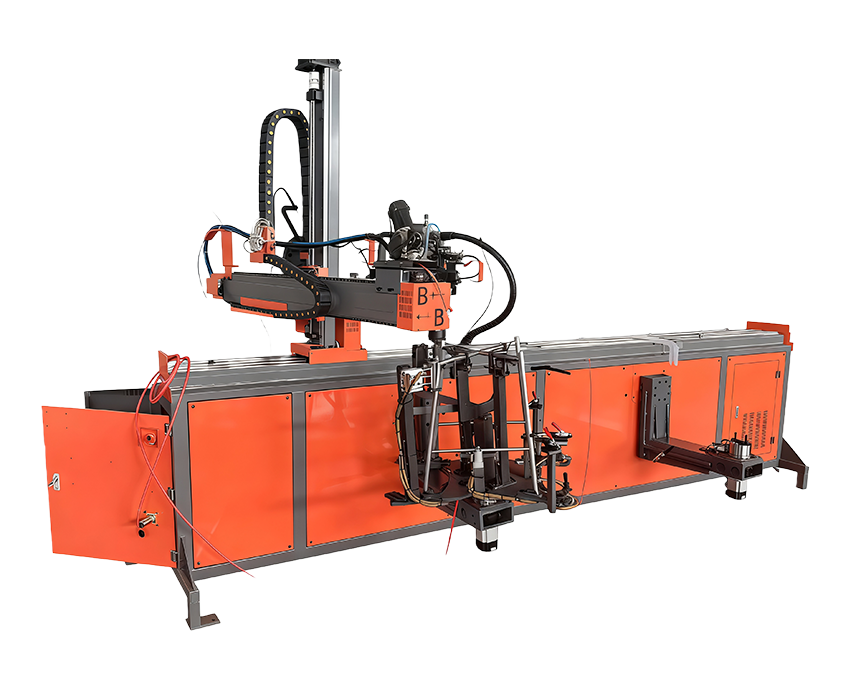
A furniture welding robot is an automated welding system designed specifically for metal furniture production. It uses robotic arms, welding equipment, fixtures, and control systems to complete accurate and repeatable welding operations.
Compared with manual welding, robotic welding systems can maintain consistent:
This makes them suitable for mass production of metal furniture products.
A complete robotic furniture welding system usually includes:
These components work together to create an efficient automated welding production line.
Metal bed frames require strong and accurate welding because they must support continuous loads during use.
Robotic welding systems help manufacturers produce:
Advantages include:
For large-scale furniture factories, automation improves both productivity and product reliability.
Metal chairs often involve complex structures with multiple joints and repeated production requirements.
A furniture welding robot can handle:
Benefits include:
Robotic welding is especially suitable for manufacturers producing thousands of similar chair frames.
Metal table production requires accurate positioning to ensure stability and appearance.
Robotic welding solutions are commonly used for:
Automation helps maintain:
Modern furniture designs increasingly use steel structures combined with wood, glass, and other materials.
Robotic welding can support:
High precision helps manufacturers achieve better product quality for premium furniture markets.
One of the biggest advantages of robotic welding is consistent quality.
Robots maintain stable welding parameters, including:
This reduces common manual welding problems such as:
Furniture manufacturers often need large-volume production with short delivery times.
Robotic welding automation provides:
This allows factories to meet increasing market demand.
Manual welding requires skilled workers and intensive labor.
Automation helps manufacturers reduce dependence on:
Workers can focus on machine operation, quality inspection, and production management.
Welding environments involve:
Robotic systems reduce direct worker exposure to hazardous welding conditions and improve workplace safety.
Different furniture products require different welding solutions.
Manufacturers should evaluate:
For example:
A suitable furniture welding robot should provide:
For complex furniture designs, higher flexibility helps improve welding accessibility.
Modern furniture factories may require integration with:
A scalable automation solution supports future production expansion.
|
Comparison |
Robotic Welding |
Manual Welding |
|
Welding Consistency |
High |
Depends on worker skill |
|
Production Speed |
Faster |
Slower |
|
Labor Requirement |
Lower |
Higher |
|
Complex Production |
Better repeatability |
Limited |
|
Long-Term Cost |
Lower operational cost |
Higher labor cost |
For mass production furniture manufacturers, robotic welding provides significant advantages in efficiency and quality control.
Investment depends on:
Different furniture applications require different configurations.
Factories should consider:
Choosing the correct automation level helps maximize return on investment.
Although robotic welding requires initial investment, manufacturers can benefit from:
Juyoubao specializes in robotic welding solutions for industrial manufacturers, helping furniture factories improve production efficiency and welding quality.
Advantages include:
Whether producing bed frames, chairs, tables, or steel furniture structures, Juyoubao provides reliable metal furniture welding automation solutions to meet modern manufacturing requirements.
For robotic welding solutions:
Email: handa@jybwelding.com
Furniture welding robots are widely used for metal bed frames, chairs, tables, steel structures, and other welded furniture components.
Factories use robotic welding systems to improve welding consistency, increase production efficiency, reduce labor costs, and maintain stable product quality.
Yes. Small and medium manufacturers can choose suitable robotic welding solutions based on production volume, product type, and automation requirements.
Robotic welding maintains consistent welding parameters and accurate movement paths, reducing defects and improving the strength and appearance of welded joints.
Related Products