


 EN
EN

+86 139 2073 4749



 EN
EN
Robotic arc welding equipment helps manufacturers improve production efficiency, welding consistency, and product quality. It is widely used in industries such as metal furniture manufacturing, bicycle parts production, agricultural machinery manufacturing, and other metal fabrication applications.
However, robotic welding systems still require regular inspection and maintenance. Without proper maintenance, problems such as unstable welding quality, unexpected downtime, and equipment wear may affect production efficiency.
A well-planned maintenance schedule helps manufacturers:
● Reduce equipment downtime
● Maintain stable welding quality
● Extend machine service life
● Reduce long-term maintenance costs
For factories using robotic welding systems in continuous production, preventive maintenance is essential for keeping the welding process reliable.
Daily maintenance focuses on components that directly affect welding performance. These inspections usually require only a short time but can prevent many common welding problems.
The welding torch is one of the most important parts of a robotic arc welding system. Operators should check the condition of:
● Contact tips
● Nozzles
● Torch neck
● Anti-spatter protection components
During continuous welding operations, consumables gradually wear out and collect welding spatter. If they are not maintained properly, problems such as unstable arcs, poor weld appearance, and inconsistent welding results may occur.
Regular replacement of worn consumables helps maintain stable welding performance.
A stable wire feeding process is critical for continuous robotic welding.
Operators should inspect:
● Wire feeding rollers
● Wire guides
● Welding wire condition
● Feeding resistance
Poor wire feeding may cause uneven welding speed, welding interruptions, or defects in the weld seam.
This is especially important for manufacturers producing repeated components such as furniture frames, bicycle parts, and machinery structures.
After daily production, operators should remove:
● Welding spatter
● Metal dust
● Residual materials around fixtures
A clean working environment helps protect welding components and improves positioning accuracy.
Weekly inspections focus on robot movement, electrical connections, and production stability.
A robotic welding system relies on precise movement to maintain consistent welding paths.
Operators should check:
● Smooth movement of each robot axis
● Abnormal noise or vibration
● Positioning accuracy
● Movement repeatability
If the robot position changes over time, welding quality may become inconsistent, especially when producing precision components.
Regular inspection helps identify mechanical issues before they affect production.
The robotic welding system includes many electrical components, including:
● Robot cables
● Welding power cables
● Control cabinet connections
● Signal cables
Loose connections or damaged cables may cause:
● Welding interruptions
● Equipment alarms
● Unexpected shutdowns
Regular inspection helps maintain stable operation.
Fixtures are important for keeping workpieces in the correct position during welding.
Maintenance should include:
● Checking fixture alignment
● Removing welding residue
● Tightening loose parts
Proper fixture maintenance improves welding accuracy for different products and reduces assembly problems.
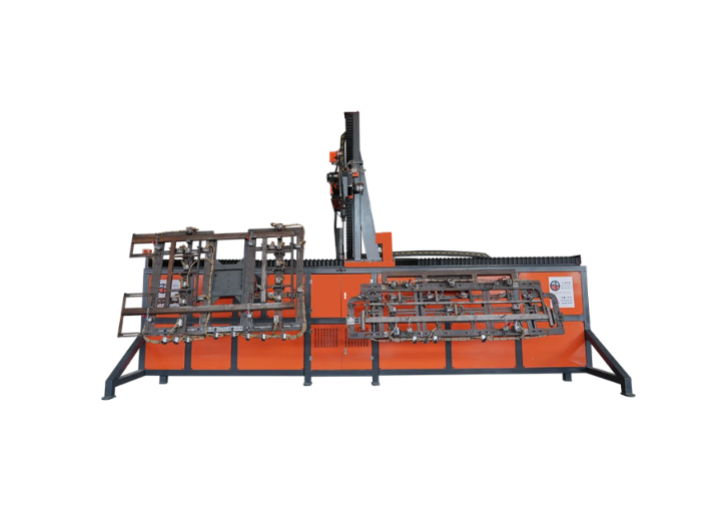
Monthly maintenance focuses on equipment performance and long-term reliability.
Robotic welding quality depends on correct welding parameters, including:
● Welding current
● Voltage
● Welding speed
● Shielding gas flow
Changes in these parameters may affect weld penetration, appearance, and strength.
Manufacturers should regularly review welding data and adjust settings according to different materials and products.
The robot arm contains multiple moving joints that require proper lubrication.
Regular checks help prevent:
● Excessive mechanical wear
● Reduced movement accuracy
● Abnormal operation noise
Proper lubrication helps maintain smooth robot movement and extends equipment lifespan.
Manufacturers often produce different products with different welding paths.
Regularly backing up robot programs helps:
● Prevent program loss
● Reduce setup time
● Improve product changeover efficiency
This is particularly useful for factories producing multiple models or customized products.
In addition to daily and monthly checks, manufacturers should schedule professional maintenance at regular intervals.
Important inspection items include:
Robot accuracy may gradually change after long-term operation. Calibration ensures the welding torch follows the correct welding path.
The welding power system should be checked to ensure stable output and reliable operation.
Safety devices such as emergency stops and protective systems should be inspected regularly to ensure safe operation.
Important components such as reducers, motors, and moving parts should be checked for wear.
Poor maintenance may cause inconsistent weld appearance, insufficient penetration, or increased defects.
Ignoring small equipment issues can lead to unexpected machine failures and production delays.
Without preventive maintenance, manufacturers may face:
● More frequent repairs
● Higher consumable consumption
● Longer production interruptions
Regular maintenance is usually more cost-effective than emergency repairs.
For manufacturers adopting welding automation, equipment reliability is just as important as welding performance.
Juyoubao provides robotic welding solutions for different manufacturing applications, including:
● Furniture welding factories
● Bicycle parts factories
● Agricultural machinery manufacturing factories
● Metal fabrication industries
Juyoubao robotic welding systems help manufacturers achieve:
● Stable welding performance
● Improved production efficiency
● Reduced dependence on manual welding
● Flexible automation for different products
Combined with proper maintenance practices, robotic welding equipment can support long-term and efficient manufacturing operations.
Regular maintenance is essential for maximizing the performance of robotic arc welding equipment. Daily inspections, weekly checks, monthly servicing, and professional maintenance help manufacturers reduce downtime and maintain consistent welding quality.
For companies upgrading from manual welding to automation, choosing reliable robotic welding equipment and following a proper maintenance schedule are both important steps toward improving manufacturing efficiency.
Learn more about Juyoubao robotic welding solutions:
https://www.jybwelding.com/


