EN
EN

+86 139 2073 4749



 EN
EN
In today's competitive manufacturing environment, improving profitability is no longer just about increasing production volume. Companies must also reduce waste, improve product quality, lower labor costs, and maximize equipment utilization. This is why more manufacturers are investing in Multi-Axis Welding Robots as a strategic solution for long-term growth.
But how exactly does a welding robot improve metalworking ROI?
The answer lies in the combination of automation, precision, efficiency, and scalability. When implemented correctly, Multi-Axis Welding Robots can significantly increase production output while reducing operational expenses, helping manufacturers achieve a faster return on investment.
Return on investment (ROI) in metalworking is influenced by several key factors:
Production efficiency
Labor costs
Material utilization
Product quality
Equipment uptime
Rework and scrap rates
Traditional manual welding often struggles to maintain consistency across these areas. Human operators can experience fatigue, skill variations, and productivity limitations. By contrast, Multi-Axis Welding Robots deliver repeatable and predictable performance throughout every production cycle.
As a result, manufacturers can improve profitability while maintaining high-quality standards.
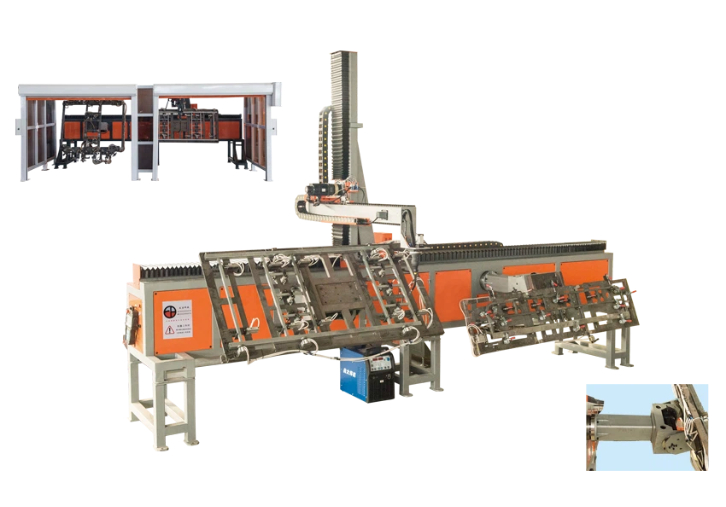
YB-06-JD Carbon Steel Arc Welding Robot
One of the most immediate benefits of robotic welding is increased throughput.
A Robotic Welding System can operate continuously with minimal interruptions. Unlike manual welding stations that require frequent breaks and shift changes, robotic systems can support around-the-clock production schedules.
When integrated into a Robotic Welding Cell with automated fixtures and material handling systems, manufacturers can significantly shorten production cycles and increase output capacity.
This advantage is particularly valuable in industries producing:
Automotive frames
Structural steel assemblies
Agricultural machinery
Construction equipment
Industrial storage tanks
Higher production volume directly contributes to improved ROI by lowering the manufacturing cost per unit.
Many manufacturers face ongoing challenges in recruiting and retaining skilled welders.
A shortage of qualified welding professionals can lead to production delays and rising labor expenses. Multi-Axis Welding Robots help address this challenge by automating repetitive welding tasks while allowing skilled employees to focus on quality control, programming, and system optimization.
Rather than replacing workers entirely, robotic welding enables manufacturers to utilize human expertise more efficiently.
The result is a more productive workforce and a lower overall cost structure.
Product quality has a direct impact on profitability.
Poor weld quality can lead to:
Rework costs
Material waste
Production delays
Customer complaints
Warranty claims
A Multi-Axis Welding Robot follows pre-programmed welding paths with exceptional accuracy. Every weld is performed using the same parameters, travel speed, and torch position.
This level of consistency helps manufacturers achieve:
Higher first-pass yield
Lower defect rates
Reduced scrap generation
Improved customer satisfaction
For metal fabricators serving demanding sectors such as automotive manufacturing and heavy equipment production, these benefits can generate substantial financial returns.
Material costs represent a significant portion of manufacturing expenses.
Inconsistent manual welding can result in excessive filler metal consumption, over-welding, and damaged components. Robotic welding systems optimize weld bead size and penetration, ensuring efficient use of materials.
Advanced technologies such as Arc Welding Control Systems and Vision-Guided Welding further improve precision by automatically adjusting welding parameters and tracking weld seams.
By reducing waste and improving material efficiency, manufacturers can protect profit margins even when raw material prices fluctuate.
Modern metalworking often involves complex geometries and difficult welding positions.
This is where Multi-Axis Welding Robots offer a major advantage.
With multiple degrees of freedom, the robot can access challenging weld locations while maintaining optimal torch orientation. This capability makes robotic welding ideal for:
Steel structure fabrication
Pressure vessel manufacturing
Pipeline construction
Shipbuilding components
Heavy machinery production
Complex projects that previously required extensive manual labor can now be completed more efficiently and consistently.
Equipment downtime directly impacts profitability.
Many robotic welding solutions incorporate Servo Positioning Systems, predictive maintenance tools, and Industrial IoT connectivity. These technologies help manufacturers monitor machine performance and identify maintenance requirements before failures occur.
Higher equipment availability means:
More productive operating hours
Better asset utilization
Reduced maintenance costs
Improved production planning
Over time, these benefits contribute significantly to ROI improvement.
As Industry 4.0 initiatives continue to expand, manufacturers are increasingly integrating welding automation into their digital transformation strategies.
Modern Multi-Axis Welding Robots can connect with Manufacturing Execution Systems (MES), production monitoring platforms, and quality management software.
Features such as:
Real-time production tracking
Offline Programming Software
Automated quality reporting
Data-driven process optimization
allow manufacturers to make informed decisions and continuously improve performance.
The ability to leverage production data creates long-term operational advantages that extend beyond welding alone.
Manufacturers investing in Juyoubao Multi-Axis Welding Robots often achieve ROI through multiple channels simultaneously.
Key advantages include:
Higher welding accuracy
Consistent weld quality
Reduced labor dependency
Lower scrap and rework rates
Improved production efficiency
Greater flexibility for complex components
24/7 operational capability
Enhanced workplace safety
Scalable manufacturing capacity
Seamless integration with smart factory systems
Because these benefits impact nearly every aspect of production, robotic welding often delivers measurable financial returns within a relatively short period.
For modern metalworking companies, ROI is driven by efficiency, quality, and operational flexibility. Multi-Axis Welding Robots help manufacturers improve all three.
By combining advanced motion control, welding automation, intelligent sensing technologies, and smart factory integration, these systems enable manufacturers to reduce costs while increasing production performance.
Whether producing automotive components, structural steel assemblies, agricultural equipment, or industrial machinery, investing in Juyoubao Multi-Axis Welding Robots is one of the most effective ways to improve metalworking ROI and build a more competitive manufacturing operation for the future.
Related Products