Because we don't provide isolated equipment, but a deeply customized turnkey project:


 EN
EN

+86 139 2073 4749



 EN
EN
Welding Automation Solution for Furniture Industry
Pain Points of Traditional Welding in Furniture Manufacturing
Traditional welding operations are plagued by several industry-wide pain points, which have become major obstacles to the production, operation and development of enterprises:
1.Severe labor turnover & difficulty in recruiting welders
Welding work features harsh working conditions with occupational hazards such as arc light and fumes, making it hard to attract young practitioners. Senior welders are prone to resignation, leaving enterprises with a perennial labor shortage and great difficulty in both recruiting and retaining welders.
2.High training investment & long onboarding cycle
Welding is a skilled trade with strict requirements for operational proficiency. New employees need long-term practical training to be competent for the job. The training process incurs huge consumption of consumables and equipment wear, leading to persistently high time and capital costs for talent development.
3.Unstable welding quality & lack of unified standards
Welding quality is entirely dependent on welders' personal experience and operational state, with human factors exerting a tremendous impact. Obvious quality differences exist between operations by different welders or the same welder at different times, failing to form a standardized welding quality system.
4.Unpredictable product yield & no stable guarantee
Product yield is directly affected by welders' working state and operational details, without precise technical means for control. Slight negligence can easily result in defective products, leading to volatile yield with complete lack of controllability.
5.High comprehensive costs & difficulty in effective reduction
Enterprises bear high salary costs for senior welders, coupled with rework and raw material waste caused by low yield. Superimposed with hidden costs such as quality control and consumable management, the comprehensive production costs of enterprises remain high, with no effective means for reduction.
Our Solution
Free your production planning from the constraints of human factors! Say goodbye to the volatility of manual operations and forge consistent and stable welding quality!
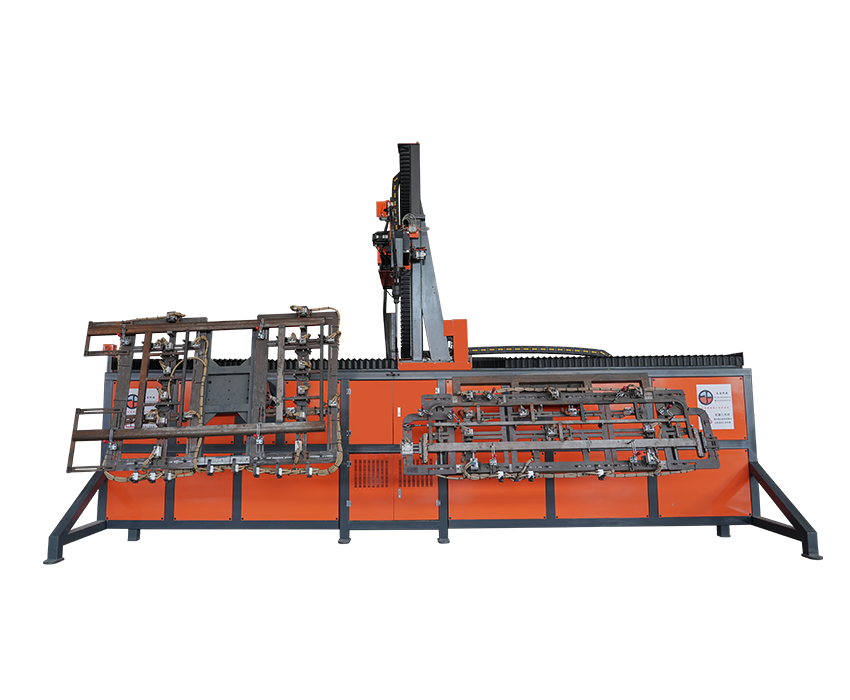
Customized Automated Welding System for Metal Chairs
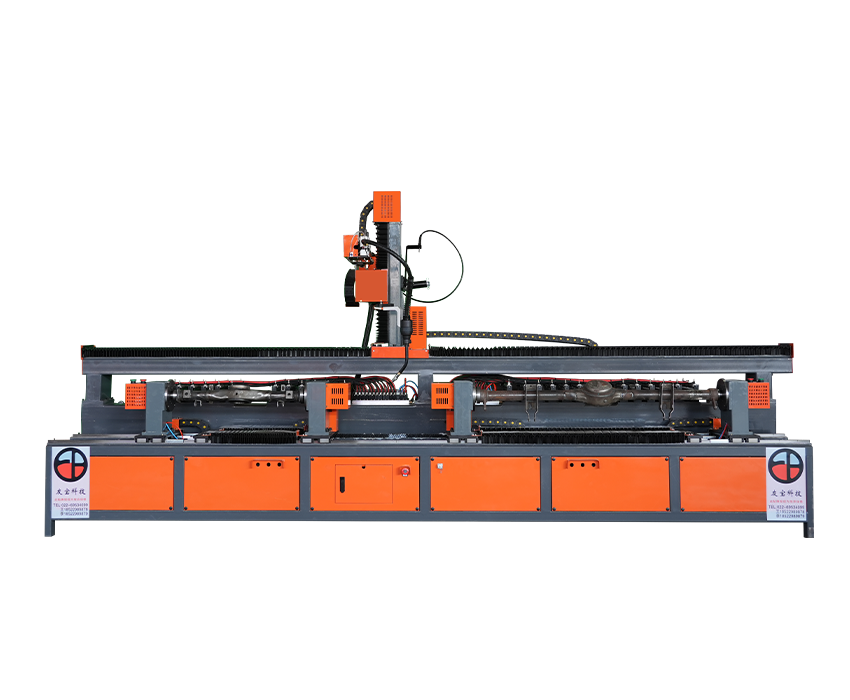
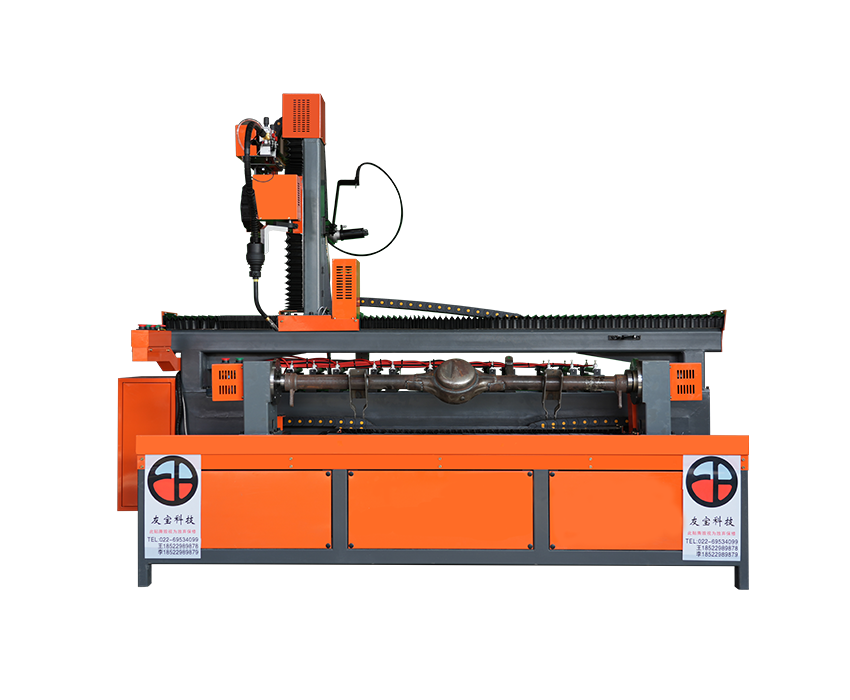
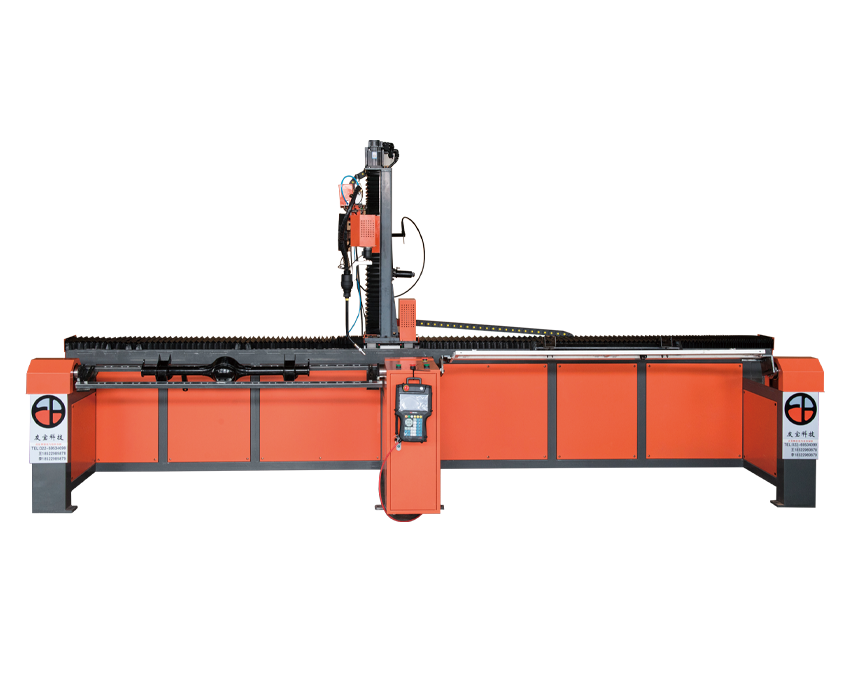
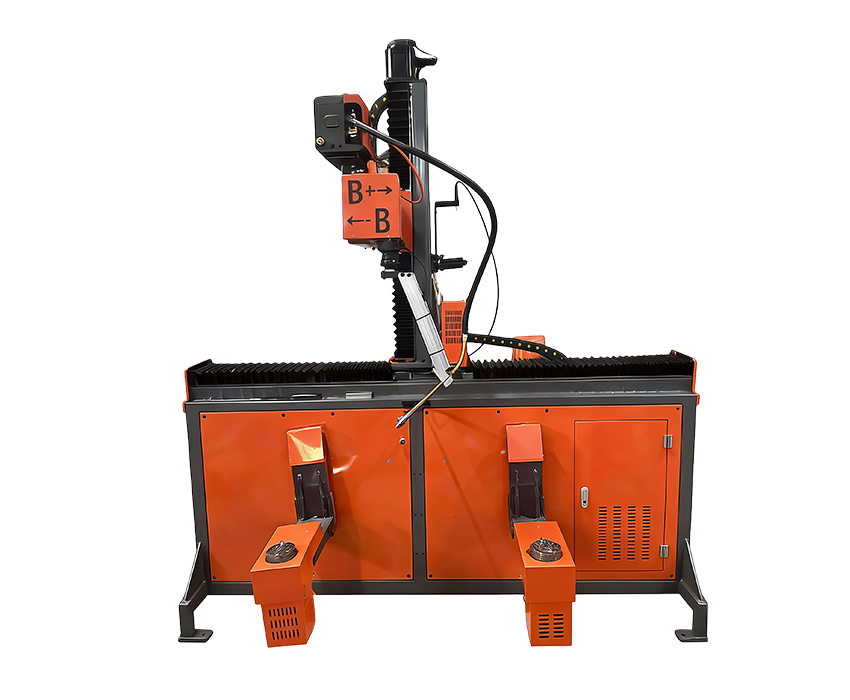
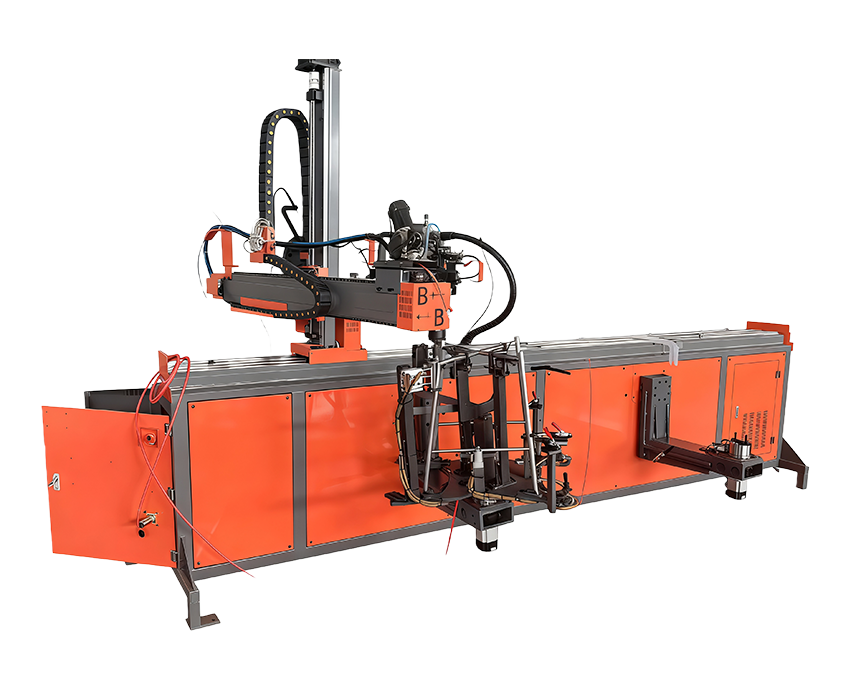
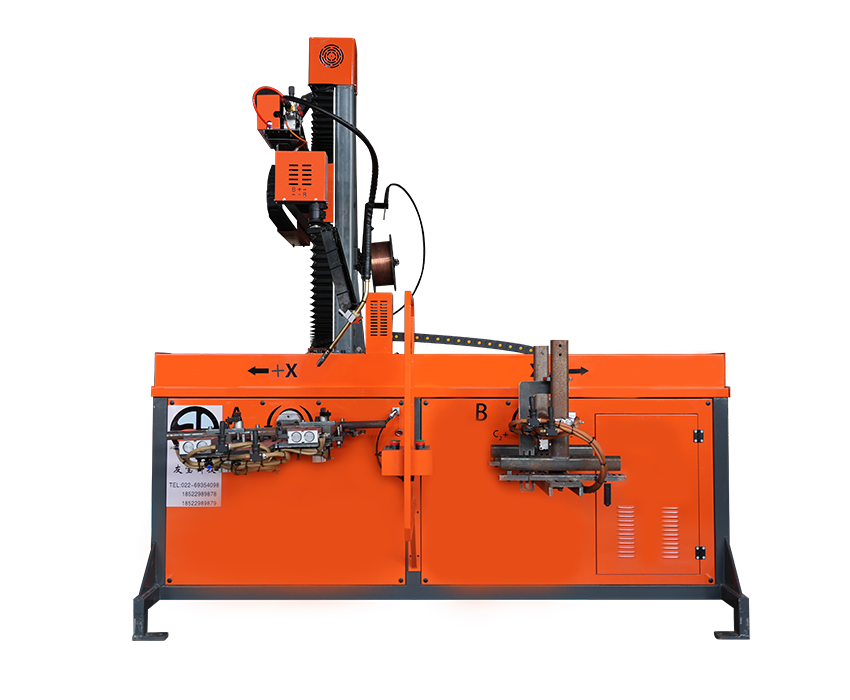
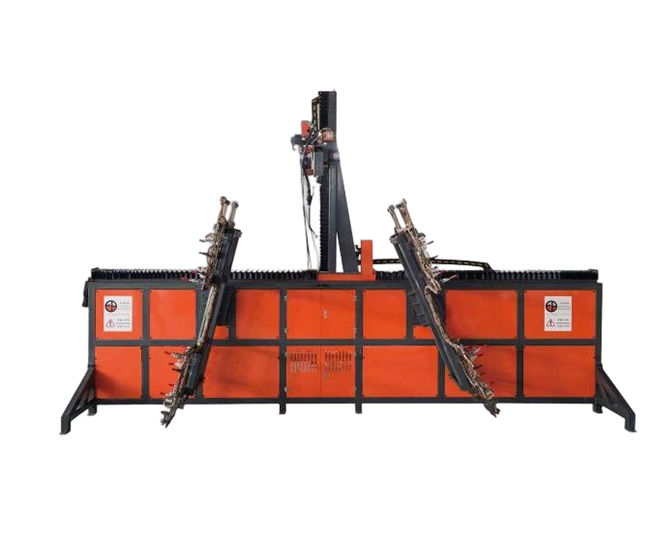
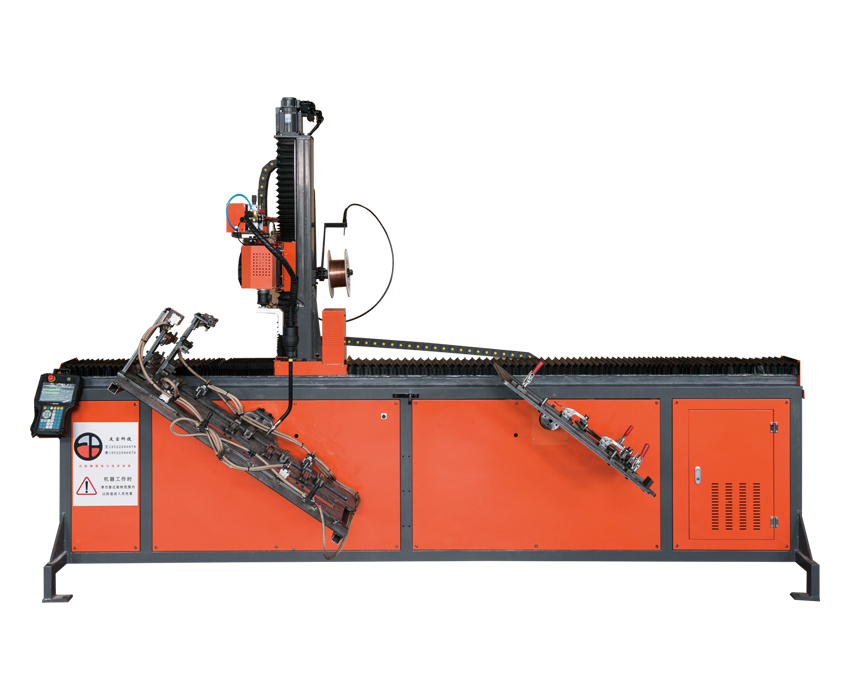
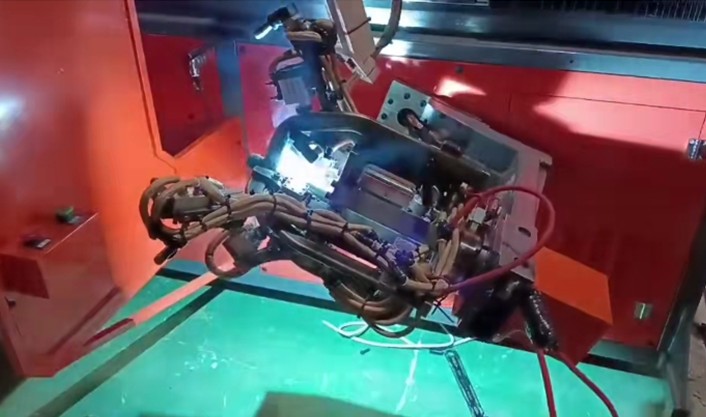
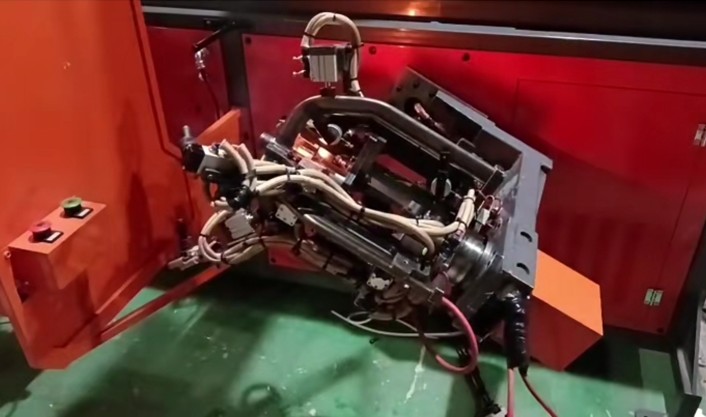
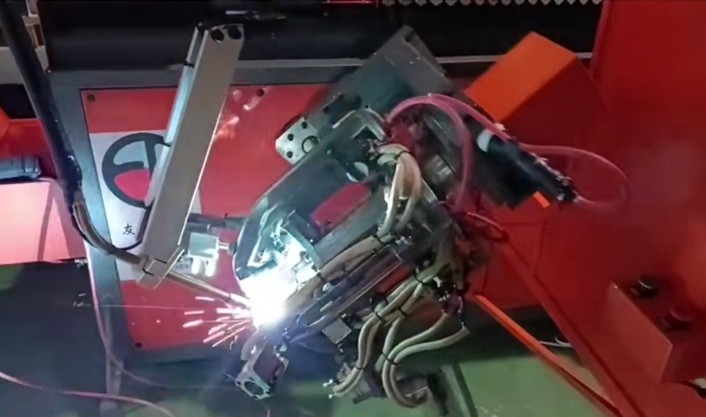
Targeting your metal chair products, we have designed a customized automated welding system based on a dual-station multi-axis welding robot. This system thoroughly resolves the core pain points of manual welding such as precision fluctuation, uncontrollable deformation, low efficiency and over-reliance on senior technicians, and significantly improves product consistency, production efficiency and welding quality.
Core Technologies & Implementation Key Points
1. High-Precision Combined Fixture System
·Station A Fixture: Precisely positions the crossing angle and central point of X-shaped tubes, and integrates a quick clamping mechanism to fix triangular reinforcing plates, ensuring gap-free fit between the plates and tubes.
·Station B Fixture: Takes the welded X-shaped frame as the benchmark to accurately position four S-shaped chair legs and backrest tubes. The fixture must ensure the spatial mirror symmetry of chair legs, which is the key to solving the biggest difficulty of manual welding.
·Unified Benchmark: The two fixtures adopt a unified design and processing benchmark to ensure consistent positioning of components after transfer.
2. Robot Welding Parameter & Path Optimization
An 8-axis multi-dimensional welding robot is selected to ensure the welding torch can reach hard-to-access positions for manual operation (e.g., the concave part of S-shaped bent tubes and the intersection of X-shaped tubes) at the optimal angle.
·Symmetrical Welding: Adopts a symmetrical and alternating welding sequence for symmetrical weld seams (e.g., corresponding weld seams of two chair legs) to offset thermal stress to the maximum extent and prevent frame distortion.
·Segmented Skip Welding: Implements segmented welding for long weld seams to avoid local overheating.
·Parameter Self-Adaptation: The robot automatically adjusts current, voltage and welding speed for positions with thickness differences (e.g., the joint between tubes and triangular reinforcing plates) to ensure consistent penetration and avoid burn-through or incomplete penetration.
3. Deformation Control Strategy
·Process Control: Minimizes heat input from the source through the above-mentioned welding sequence optimization and precise heat input control.
·Rigid Fixation: The workpiece is fully constrained by the fixture and only released after the completion of all welding processes.
Core Value Delivered
Through the integrated design of special fixture for shape retention, dual-station parallel operation for efficiency improvement, robotic flexible welding and intelligent path planning for deformation control, this Welding Automation Solution for Furniture Industry provides a complete and reliable automated welding solution for the exquisitely structured metal chair frame. It not only directly resolves all process pain points in welding, but also upgrades the production mode from "craftsman-dependent" to "process and equipment-dependent", laying a solid manufacturing foundation for the large-scale and brand-oriented development of your products.
Why Are We Your Reliable Partner?
Because we don't provide isolated equipment, but a deeply customized turnkey project:
Process package solidification
Juyoubao will pre-develop and test all welding processes specific to your wheelchair model, solidifying the optimal parameters into the system.
Rapid ROI
Typically, the welding robots investment can be recovered within 6-10 months through savings in labor, consumables, and incremental profits from increased efficiency.
Continuous support
From installation and commissioning, personnel training to process optimization, we provide full lifecycle support to ensure continuous and stable output.
Looking for Welding Automation Solution for Furniture Industry?Contact us
Related Products